
Have you ever noticed that some cars still look glossy and flawless even after years of use?
It’s not just because they are washed frequently.
The real reason is a proper paint protection system known as Ceramic Coating (Glass Coating).
What Is Ceramic Coating?
Despite the name, “glass coating” does not mean applying real glass onto your car.
It refers to a hard coating technology that chemically bonds with the vehicle’s clear coat layer, forming an additional protective film on top of the paint.
This layer provides:
- Deep, reflective gloss
- Hydrophobic (water-repellent) surface
- Increased surface hardness
- Long-term protection against environmental damage
In simple terms:
Ceramic coating helps “lock in” your car’s showroom finish for years.
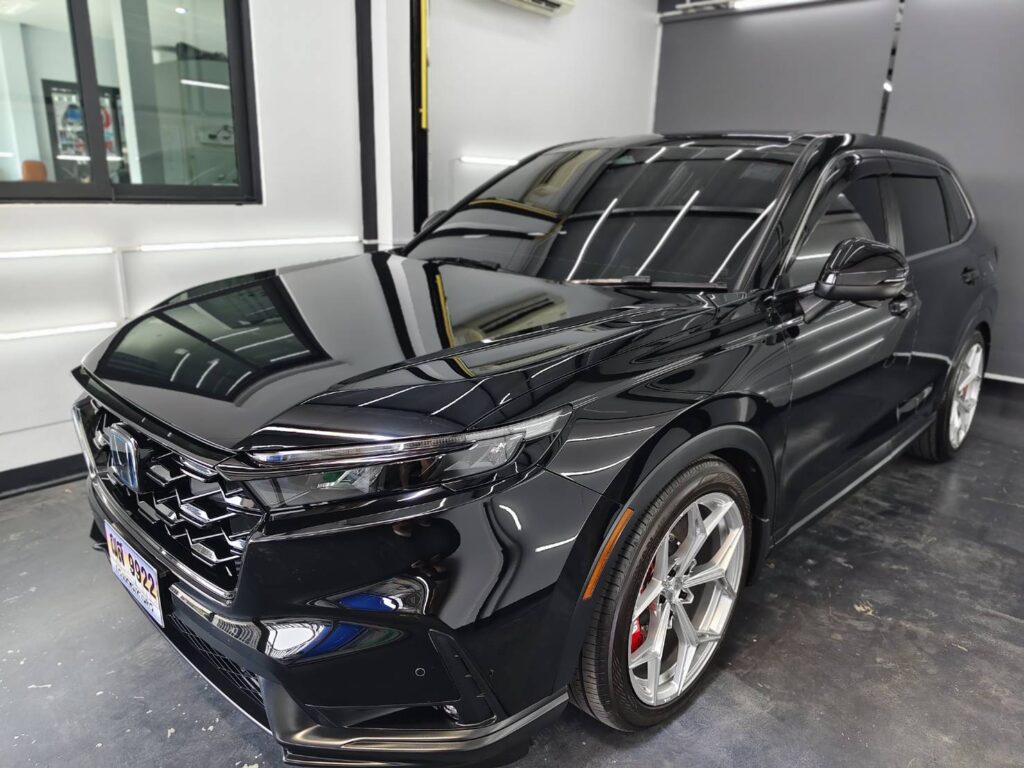
Ceramic Coating vs Wax
| Feature | Wax | Ceramic Coating |
|---|---|---|
| Durability | 2–4 weeks | Years |
| Gloss | Soft shine | Deep, glass-like gloss |
| Protection | Basic | Advanced |
| Wash resistance | Wears off easily | Highly durable |
| Maintenance | Frequent reapplication | Easy upkeep |
Summary:
Wax = short-term shine
Ceramic coating = long-term protection
Evolution of Coating Technology
1. Silica Coating (SiO₂)
The starting point of modern coatings
- Enhances gloss
- Provides water beading
- Hardness around 7H
Best for entry-level protection
2. Ceramic Coating (SiC-based)
The professional industry standard
- Hardness: 9–10H
- Better scratch resistance
- Strong chemical and UV resistance
- Lifespan: 3–5 years
Why it’s the most popular choice:
It offers the best balance between performance, durability, and value
3. Graphene Coating
Advanced enhancement technology
- Improves heat dissipation
- Reduces water spotting
- Enhances slickness and gloss
Note:
Graphene does not replace ceramic—it enhances it
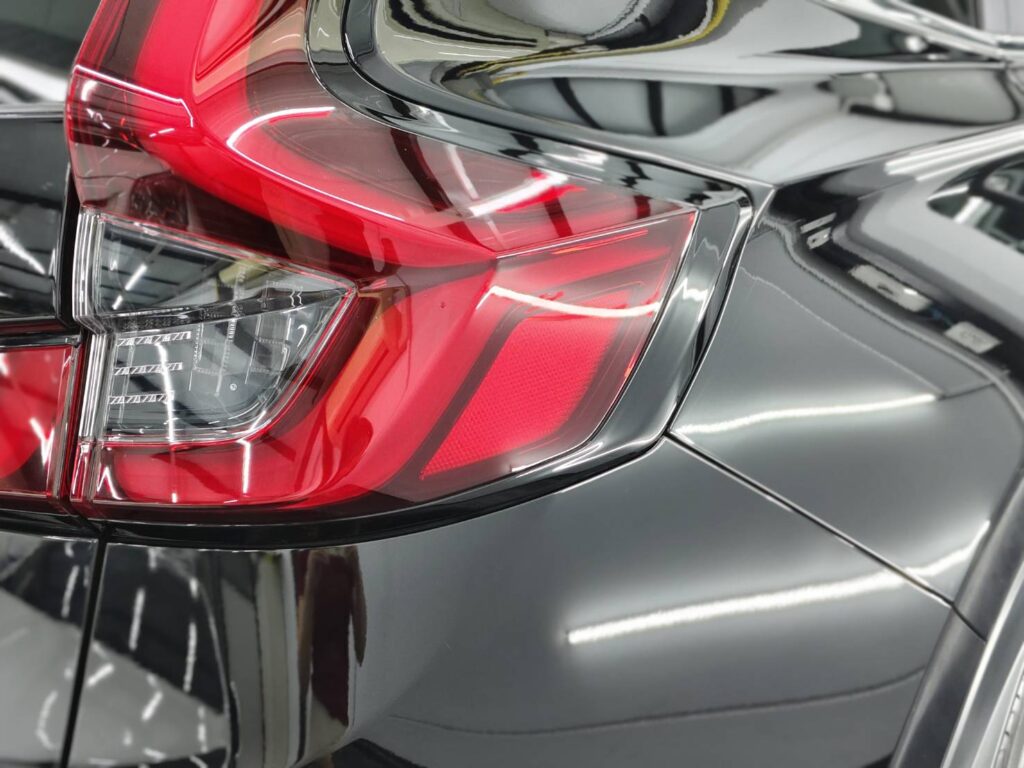
The Science Behind Ceramic Coating
Ceramic coatings work through four key mechanisms:
- Hydrophobic Effect
Repels water and reduces dirt adhesion - Chemical Resistance
Protects against acids, rain contaminants, and pollutants - UV Protection
Prevents oxidation and fading - Surface Hardness
Adds a harder layer to reduce minor scratches
The Application Process (What Truly Determines Quality)
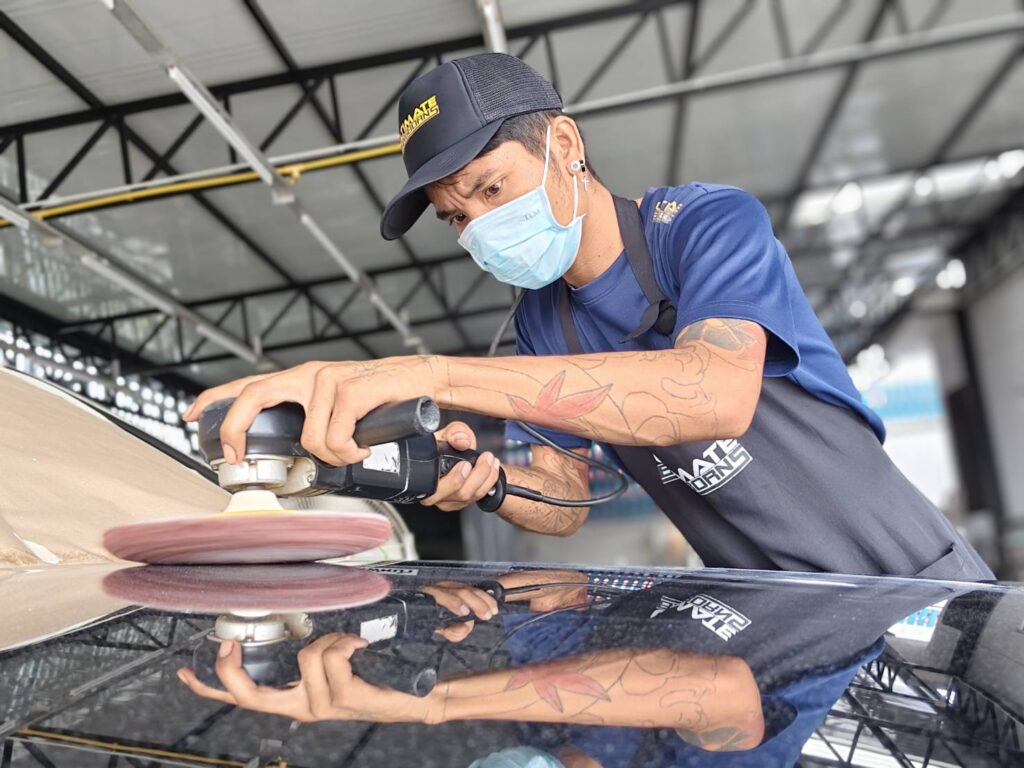
A high-quality ceramic coating job involves:
- Paint inspection
- Deep cleaning and decontamination
- Paint correction (removal of swirl marks and defects)
- Surface preparation (primer application)
- Coating application (crosshatch method)
- Curing process
- Final inspection
Typical duration: 8–15 hours, depending on the vehicle’s condition
The Truth Most People Don’t Know
The final result does NOT depend on the coating product alone
It depends equally on:
- Surface preparation quality
- Technician skill and experience
- Application standards
- Controlled working environment
- Post-coating maintenance
Straight talk:
Even the most expensive coating can fail if applied incorrectly
Durability
Average lifespan: 3–5 years
Depending on:
- Driving conditions
- Parking environment
- Washing habits
- Maintenance routine
Benefits of Ceramic Coating
- Deep, mirror-like gloss
- Reduced risk of minor scratches
- Protection against UV and chemical damage
- Easier cleaning and maintenance
- Less dirt and contamination buildup
Limitations (Let’s Be Honest)
- Does not prevent heavy scratches or impact damage
- Not a “bulletproof shield”
- Still requires proper care
Who Is It For?
- Car enthusiasts
- Busy owners who want easy maintenance
- Anyone who wants long-term paint protection
- New cars or freshly polished vehicles
Why Choose Ultimate Bangbon 5
- Over 14 years of experience
- High-quality ceramic coating systems
- Professional paint correction process
- Controlled application environment
- Aftercare service and honest consultation
Final Thoughts
If you want your car to:
- Maintain a deep, glossy finish
- Be easier to clean
- Stay protected for years
Ceramic coating is one of the most worthwhile investments today
Contact & Promotion
Promotions vary by period
For accurate pricing, please provide:
Car model + Year
Our team will recommend the most suitable package for you
 080-935-3565
 Google Maps: Ultimate Bang Bon 5
 Waiting room with free wifi available. Credit cards, QR code payment, and cash accepted. We can issue quotations and tax invoices.